Rolfe Reflective Model: Complete Guide with Examples


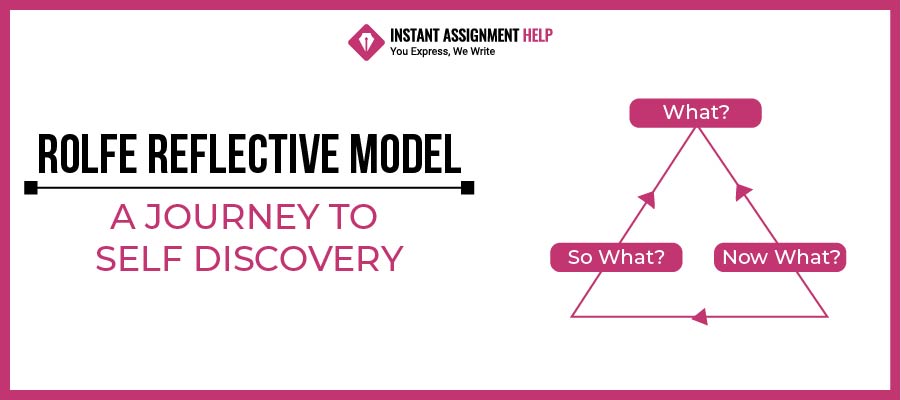
Table of Content
Reflection can be thought of as quite simple until you finds yourself staring at a blank page trying to turn the confusion from an unfortunate shift at work into 1,500 words of “critical analysis.” This is usually when one begins to look for a structure and one of the first options offered is the Rolfe Reflective Model, especially in disciplines such as nursing, healthcare, education, or social work. Why? Because it asks three very simple questions. What? So what? Now what?
This guide will show you how the Rolfe Reflective Model works, who designed it, what happens in each of its three stages, and how to apply it systematically.
What is Rolfe Reflective Model?
The framework was published by Gary Rolfe together with Dawn Freshwater and Melanie Jasper in the year 2001 in their book. This reflective framework consists of three stages, where three interrelated questions are asked in order to examine the experience: What happened? What does it mean? What is your next step in relation to this? All the questions depend on each other and help you move from a plain description of events to real reflection and practical action. The model is often called “What, So What, Now What”, as the title reflects the framework itself.
The framework was developed to facilitate engagement with reflective practice rather than making it purely academic. Experts in nursing and healthcare often reflect while under pressure, after a difficult shift, problematic communication with patients, and any kind of mistakes made on the go.
Understanding the Three Stages of Rolfe Reflective Model
This cycle is often termed nursing reflection because it allows healthcare professionals to reflect on their experiences using three easy steps. However, it is crucial to understand what each stage evaluates to have a realistic reflection.

Stage 1 — What?
This is the descriptive stage, which is the stage at which most students tend to rush through or get stuck with too much writing. The objective here is very clear - to describe the situation at hand without making any judgments yet. You answer questions like:
- What happened, exactly?
- Who was involved, and what was the situation?
- What did I do, see or say?
- What was the outcome then?
Keep the facts here. Your opinions and feelings will come in the second stage; including them in this stage is one of the reasons why "What?" becomes too long and blends into the next stage.
Stage 2 — So What?
Here is where reflection takes place and where the markers spend most of their time looking into. “So What?” requires you to reflect on the experience, not just tell the story about the experience:
- What does the experience really mean?
- How did I feel then, and how do I feel now in retrospect?
- What knowledge, theories, or past experiences help to explain the situation?
- Why is this important for me and my practice/education?
- What have I learned from this?
A good “So What?” connects your experience to some sort of theory or evidence, such as the literature, clinical guidelines, or models that you have studied rather than just the emotions you felt.
Stage 3 — Now What?
This final stage is where comprehension is put into practice. This is where you show that you not only understand the experience, but you will be applying a new approach based upon your experience:
- What will I change the next time?
- Which specific skills or knowledge will I need to improve on?
- What is my plan, and how will I measure its success?
- How does this fit in with my professional development?
Vague statements such as "I will try to be more clear in expressing myself" rarely earn top marks. It is the tangible plans of action with specific results that are of much greater significance. Here is a table that shows all stages precisely:
|
Stage |
Key Question |
Purpose |
|
What? |
What happened? |
Describe the situation or project with facts |
|
So What? |
Why does it matter? |
Analyse meaning, authentic feelings, and key learning |
|
Now What? |
What will you do next? |
Build an action plan for further improvement |
How to Use Rolfe Reflective Model Step by Step?
Understanding the procedure of using the Rolfe Reflective Model is extremely important because it does not involve any shallow approach but forces you to make changes from your mistakes for the future. Hence, the steps below will help you understand the reflective essay outline and correct analysis of each experience.
Step - 1: Describe the Experience
It is essential to note exactly what you actually experienced by recording the event accurately. Concentrate on the facts, such as the setting, the people involved, the sequence of events, and the immediate outcome. Do not analyse any of this yet, as you only require mentioning all details in the first step.
Step - 2: Evaluate What Happened
After establishing the facts, try to understand why it happened. You should include your feelings. However, you have to include evidence as well: what was stated in your textbook, what the clinical reasoning behind it is, what was taught in class, or some other similar experiences that you have had before.
Step - 3: Identify Learnings
Get down to the specific knowledge that you have gained through the analysis. What are the actual lessons that this experience taught you? Try to convey this through one or two sentences. If you fail to do so, perhaps it is time to revisit Step 2 and analyse the experience again for better insights.
Step - 4: Build A Realistic Action Plan
Transform the lesson into a concrete plan. Make clear changes that need to be made, outline the resources needed, and state how the success of all changes made will be evaluated. This is the step, which makes reflective writing using the Rolfe Model so much more than just an exercise.
Struggling to Apply the Rolfe Reflective Model in Your Nursing Assignment?
Get a Custom, Well-Structured Reflection Written by Our Nursing Experts
Get Nursing Assignment HelpRolfe Reflective Model Example
The observation of how the model is being applied makes its use much easier. Four short examples are provided below. They all represent the format of the model but cannot be used directly as examples.
Nursing Example
The sample below shows a systematic structure for writing a nursing reflection using the Rolfe model with precision:
What?
During one of my shifts, the patient was distressed due to the results of their tests, and I struggled to say the right thing to comfort them.
So What?
In looking back at the past, I realized that I focused too much on informing the patient while not focusing enough on acknowledging how the patient felt at that moment. Communication theory on delivering bad news stresses the significance of waiting to ensure comprehension; something that I did not do.
Now What?
I plan to use a structured process for difficult conversations in the future and ask someone to observe me during my next similar conversation.
Student Assignment Example
This model can be used for student reflective writing. Below is a precise example of the same, which will help you understand how to write a reflection using the Rolfe method.
What?
My grades for a group presentation were not what I expected because I did not rehearse my portion with the whole group.
So What?
What I did not realize is how important the relationship between each of the sections in a presentation was compared to the content of the section alone. This relates to collaborative learning and indicates that rehearsal helps create group cohesiveness.
Now What?
For the next group assignment, I will organize an entire practice session with my group two days before submission and time each section.
Teaching Practice Example
Reflection is not limited to a specific profession; whether you are a nurse or a teacher, you will face challenging situations. Here is an example that shows how a teacher reflects on their teaching experience.
What?
A lesson plan I created that involved students working in groups independently fell apart because the students were not clear about the directions for the activity.
So what?
I believed that the instructions on the slide were enough, but I neglected to make sure my students understood the directions before moving into the group activities. It shows the common gap between how things were intended to be taught and how they ended up being taught.
Now What?
Going forward, I will ensure that there is always a "repeat it back to me" step for each group activity. Therefore, those students can understand instructions clearly.
Workplace Example
The example below shows how professionals working in an organisation can reflect on their experiences using the Rolfe reflective practice model.
What?
The deadline for a particular project went unnoticed since I did not make the necessary effort to inform my manager on the problem of resource allocation in time.
So What?
While I chose to remain silent as I was afraid of appearing unable to handle the task, my hesitation caused us to lose more time than if I had raised the issue right away.
Now What?
I am going to create a standard procedure for myself, whereby I will notice any threat to the deadline immediately. Additionally, I will try to improve my communication skills to present my thoughts clearly in front of my higher authorities.
Advantages of Rolfe Reflective Model
The core benefits of this reflective cycle revolve usually around its accessibility, extreme simplicity and focus towards actions to improve the prior mistakes. Here are the key advantages of the Rolfe reflective model:
- Easy to understand: the three questions are easier to memorise than the six-step cycle, which makes the model easy to understand for beginners.
- Flexible: the model works in nursing, education, business and any other field where people have to learn by gaining experience.
- Encourages critical thinking: the “So what?” stage motivates you to think beyond the description into actual analysis
- Encourages continuous learning: by ending up with an action plan, the model encourages the habit of continuous improvement rather than one-time reflection.
- Useful for reflective activities: the systematic nature of the model makes it useful in academic reflections.
Limitations of Rolfe Reflective Model
Oversimplification is the key limitation in Rolfe's reflection model. Due to its reliance on the three major questions ("What?", "So what?" and "Now what?"), this model might cause biased reflections in complex academic and professional settings. Other limitations include:
- It can result in oversimplifying the situation: three questions may not be enough room for discussing an extremely complicated or emotionally charged case.
- It requires honest self-evaluation: this method will work well only when you are ready to analyze your actions, which is not always easy to do.
- Less-structured than Gibbs: without the additional stages provided by Gibbs method, such as a separate stage called “Feelings” or “Evaluation”, it becomes easier to neglect some important details.
- Requires guidance from beginners: because of the more open format of the three questions, it might take more time for novices to come up with something to start from.
Rolfe Reflective Model vs Other Reflective Models
You must have heard about different reflective cycles, such as Gibbs, Kolb's, Driscoll and Rolfe. Each model has its unique approach that allows students to reflect on their prior events and make crucial changes to avoid mistakes in future. But do you know why Rolfe's reflection stands out among all of them? Well, read the section below and find out why.
Rolfe vs Gibbs Reflective Cycle
The Gibbs Reflective Cycle was published in 1988 and contains six stages, which are: Description, Feelings, Evaluation, Analysis, Conclusion, and Action Plan in an ongoing cycle. Whereas Rolfe's framework focuses on similar issues in three steps only. Therefore, it can be implemented faster but has fewer details. Here is how all models differ from one another.
|
Aspect |
Rolfe's Reflective Model |
Gibbs' Reflective Cycle |
Kolb's Experiential Learning Cycle |
|
Structure |
It has three simple questions: What? So What? Now What? |
It has six stages: Description, Feelings, Evaluation, Analysis, Conclusion, and Action Plan. |
Uses four stages: Concrete Experience, Reflective Observation, Abstract Conceptualisation, and Active Experimentation. |
|
Complexity |
It is straightforward and easy to apply in busy practice settings. |
Gibbs model is more detailed and structured, encouraging deeper reflection. |
Focuses on learning through a continuous cycle of experience, reflection, theory, and practice. |
|
Focus |
The model emphasises understanding the event, its significance, and future action. |
It is focused on exploring emotions, evaluation, analysis, and learning before planning improvement. |
More structured, linking reflection directly to learning and skill development. |
|
Time Required |
Quicker to complete due to its concise format. |
Takes longer because each stage requires detailed consideration. |
Best for education, training, and professional development where learning from experience is emphasised. |
|
Best Use |
Rolfe is suitable for rapid reflection and immediate decision-making. |
It is ideal for comprehensive learning, professional development, and complex situations. |
Produces new knowledge and behaviours by testing ideas in future experiences, creating an ongoing learning cycle. |
Which Reflective Model Should Students Choose?
The process of selecting the right model to seek assignment help depends completely on the specific requirement and depth of the reflection. However, the table below explains which model is suitable based on different situations.
|
Reflective Models |
When to use? |
|
Rolfe Reflective Model |
It is suitable for writing a quick, focused reflection under time pressure. |
|
Gibbs Reflective Cycle |
This model is best when you need to cover feelings, evaluation, and analysis as separate sections |
|
Kolb Learning Cycle |
Explain how learning happens through experience over time, which makes it best for critical analysis of your experiences. |
Where Is Rolfe Reflective Model Used?
Students and professionals from different fields can use the Rolfe reflection model, but it is primarily used in the healthcare sector. It is strongly valued because of its simplicity, which makes the reflection process easier for users. The common areas where this reflective cycle is used include:
- Nursing: This is one of the most common areas where the model is applied in evaluating interactions, decision-making, and placements.
- Health Care: The model is widely applied by allied health care practitioners in evaluating their situations as well as preparing their professional portfolios.
- Social Work: This model aids professionals in handling difficult cases and client relations. Moreover, it is widely applied in evaluating projects, volunteer complaints, and teamwork.
- Higher Education: Students studying in universities use this tool frequently to analyse their performance and find areas for improvement.
- Career Development: This model is widely used not only in education but also in evaluating career development.
Confused Between Rolfe, Gibbs, and Kolb for Your Reflection?
Let Our Subject Experts Pick the Right Model and Write It for You
Talk to an ExpertCommon Mistakes When Using Rolfe Reflective Model
- Only describing events: One of the crucial mistake is spending most of the word count on the “What?” aspect while giving only little room for true analysis.
- Avoiding analysis: Another common issue is looking at the “So What?” part as yet another explanation without delving into its importance and root causes.
- Poor action plans: Students often end up with vague ideas like “I will do better” instead of specific actions, due to which they fail to improve their performance. Hence, leading to negative results.
- Lack of evidence: not relating the “So What?” aspect to any theory or research and reducing the analytical part is another mistake that every student make when using this reflective cycle.
- Lack of connection between theory and practice: Students often think that both theory and practical experience are separate entities. Thus, they fail to identify how both relates to one another and affect the entire process.
Tips for Writing an Excellent Reflection
- Use first person appropriately - Use the first person pronoun such as “I” when writing the paper (I realised, I saw, I learned) in order to demonstrate your involvement and responsibility for what happened to you. Reflection should clearly express your point of view as opposed to describing events objectively.
- Stay critical - Stop merely telling of the events. Find out why things happen, question your assumptions, acknowledge both positives and negatives, and consider alternatives. Critical reflection is an indicator of improved thinking and self-reflection skills.
- Support reflection with literature - Enhance your analysis by combining your experience with theory or research. The use of literature can help to validate your analyses and demonstrate your capability to combine practice with theory.
- Show learning - State clearly what you have learned from the experience. You need to point out any new learning, skills, or knowledge that you have acquired and state how your attitude has changed after reflecting on it.
- Focus on improvement - Conclude by identifying the specific actions that you will take in the future. Identify how you will apply your learning, improve your performance and respond differently to similar situations in the future such that your reflection contributes to personal growth. In addition, if you are writing an assignment, then make sure you use the correct citation method, including Harvard referencing or APA.
Final Thoughts
The Rolfe reflective model derives its reputation due to its simplicity, as it has only three questions. It is highly useful if you are a student nurse reflecting on a placement, a teacher reflecting on a poorly taught lesson or even a professional reflecting on a difficult week at work. Although it is simple, several student may struggle to put their experience into words. In such cases, you can seek help from our qualified writers. They can help you with an assignment, using correct structure, guidelines, and referencing. So, connect today and get the most authentic reflection!
Need Help Writing Your Reflective Essay or Assignment?
Get a Well-Structured, Plagiarism-Free Reflection from Our Nursing & Essay Experts
Order NowFAQs
What is the Rolfe Reflective Model?
It is a model of reflection, which consists of three phases: What? So What? Now What?, developed by Gary Rolfe, Dawn Freshwater, and Melanie Jasper in 2001. It helps professionals describe the experience, make sense of it, and plan future actions, and it is used extensively in nursing education.
What are the three stages of the Rolfe Reflective Model?
These three stages include “What?” (describing the experience objectively), “So What?” (exploring the significance and feelings), and “Now What?” (developing a plan for improvement in the future). Each of these stages depends on the earlier one.
What do What? So What? Now What? mean?
"What?" asks you to elaborate on your experience in detail. "So What?" asks for the significance and importance of the experience. "Now What?" asks you to think about what you will do differently in the future.
How do you write a reflection using the Rolfe Model?
Discuss the experience in an objective manner in the “What?” part, give a meaning of the experience in relation to theory in the “So What?” part, and finally discuss future steps that can be taken in the “Now What?” part.
Who created the Rolfe Reflective Model?
The model came out in 2001 when Gary Rolfe presented it, along with Dawn Freshwater and Melanie Jasper. It further develops questions that had already been posed in 1970 by educator Terry Borton.
Why is the Rolfe Reflective Model used in nursing?
The model is simple and suits the quick pace of clinical practice, enabling nurses to reflect on patient care and difficult situations without much framework. It helps in connecting the practice to theoretical principles that are very important in nursing education.
Is Rolfe better than Gibbs?
Rolfe's model works perfectly for quick reflective writing, while Gibbs' model suits longer pieces of reflective writing where distinct sections are to be devoted to feelings and evaluations. The correct choice depends on the assignment criteria and depth required.
What is the difference between Rolfe and Driscoll?
They both use the same three key questions, which were formulated by Terry Borton. Driscoll uses extra questions to give triggers on how to proceed with each step, while Rolfe gives a more open framework.
Can students use the Rolfe Reflective Model for assignments?
Yes, it is one of the most widely used formats for reflection in nursing, educational, and social work courses owing to the simplicity of the three-section format that perfectly fits typical word counts and marking rubrics.
What are the advantages and disadvantages of the Rolfe Reflective Model?
The pros of this framework are the simplicity, flexibility, and action orientation; while the limitations include the possibility of oversimplification of complex situations and having less built-in structure than frameworks like Gibbs' Model. It will be best utilised when it is used in tandem with critical thinking.
Was This Blog Helpful?





Get 5% Cashback
On App - Grab it while it lasts!

Download app now (or) Scan the QR code



Login / Sign up
Get Your Free Dissertation Outline NOW !Congratulations!
Check Your Registered Mail for download

- Plagiarism
- Pricing
- Order Now
- Call Back