Face Validity in Research: Definition, Examples


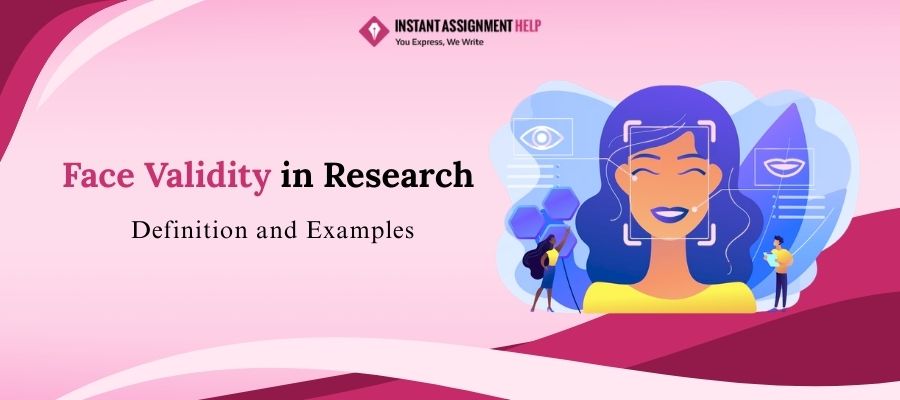
Table of Content
The face validity often raises the first question in research: “Does it look like it measures what it claims to measure?" The first impression plays a vital role in how participants, experts and the public view a study. Though deeper statistical validation is essential, the initial perception of a test can influence cooperation, credibility, and participation. Thus, face validity remains an important concept in research, accompanied by key traits, practical examples, and relevance in modern studies.
What is Face Validity?
By face validity definition, it refers to how much a research or test measures what it is intended to measure. It emphasises whether the measure looks relevant and appropriate on the surface. Well, in research, this often includes colleagues or experts reviewing the work to judge if it seems appropriate for assessing the stated purpose. However, the face validity test is useful for perception and acceptance, face validity does not guarantee the actual accuracy of the measurement.
Key Characteristics of Face Validity
Understanding the key characteristics of face validity assists researchers in quickly seeing how a test appears appropriate and suitable.
Below are the trains that guide assessment, expert review, and participant perception and make the face validity research methods more effective:
- Subjective: Based on judgment or first impression.
- Surface-Level: Assesses the relevance of the test items at face value.
- Quick Assessment: Quickest way to initially check if a measure seems suitable.
- Aids Acceptance: Better face validity can increase the confidence and cooperation of the participants.
These characteristics help students to complete their academic assignments with more precision and accuracy. Business assignment help can also make your task easier to an extent.
What is the Importance of Face Validity in Research?
As we have explained earlier face validity in research is not a guarantee that a test is actually measuring what it is supposed to.
However, it is still important for the following reasons:
- Public Acceptance: Enhances the public's acceptance of a test as it works as a face validity psychology and is used to make important decisions, like educational placement or employment selection.
- Clinical Utility: Important for establishing rapport with the client, and if the client feels that the assessment tools used are relevant to their respective concerns, they are more inclined to trust the clinician's process.
- Test-taker Cooperation: If a test appears relevant and meaningful to the test taker, then they are more likely to take it seriously and offer honest and accurate responses.
Examples of Face Validity
It is better to get an indicator of face validity at an early stage in the research process.
Here are two face validity example situations where assessing face validity becomes vital.
Example 1: Developing a new test
You develop a personality test for job seekers. Your test asks respondents how they would react in specific situations at work.
You ask employers, employees, and unemployed job seekers to review your test for face validity. While employers say that it has strong face validity, the other two groups say that they cannot always answer questions like these accurately without knowing the job and company well. For them, it has limited face validity.
Example 2: Repurposing an existing test for a new population
You decide to assess math and verbal skills for a study. You take an IQ test developed for secondary school pupils in the UK and plan to use it for secondary school pupils in India.
Potential participants, teachers, and other researchers in India review your test for face validity. They all find the verbal section low in face validity because some questions are highly culture-bound to the UK. However, the maths section is strong in face validity.
Even after going through the above example, if you face a problem at any stage, then you can take assistance from assignment help for a clear understanding and be helpful in your research as well.
How to Measure Face Validity?
Here is the way to measure face validity with suitable questions:
- Test-taker Feedback: Question participants to rate whether test items seem clear and relevant to what the test intends to measure.
For example: “How much do they agree with the statement?”
- Expert Review: Experts in the field can assess whether the test content appears to align with the construct being measured.
For example: "Does the measurement method seem useful for measuring the variable?”
- Systematic Assessment: Experts match items to relevant domains, and methods, like factor analysis, can identify agreement or differences in judgments.
For example: "Is the measure seemingly appropriate for capturing the variable?”
Most of the students study these sorts of concepts during their academic learning, and if they find it challenging to analyse the facts, the statistics assignment help services in the UK are there to help you out.
Comparison: Face Vs Content Vs Construct Validity
The face validity is one of the four different types of measurement validity. The other three being construct, content, and criterion validity.
Take a look below for a comparative analysis of face validity vs construct validity and content validity.
|
Feature |
Face Validity |
Content Validity |
Construct Validity |
|
Definition |
Looks like it measures what it should. |
Covers all relevant content of the domain. |
Truly measures the intended theoretical construct. |
|
Focus |
Appearance and perception. |
Test content coverage. |
Underlying theory and related behaviors. |
|
Perspective |
Test-takers, non-experts |
Subject matter experts |
Researchers, psychometricians |
|
Rigor |
Subjective |
Objective |
Highly rigorous; theoretical + statistical evidence |
|
Example |
Depression questionnaire about sadness. |
Math test covering all topics taught. |
IQ test correlating with academic performance. |
|
Importance |
Ensures acceptance and cooperation. |
Ensures accurate content measurement. |
Confirms test reflects the intended construct. |
|
Limitation |
Subjective; may not reflect true validity. |
Hard for complex domains. |
Requires theory and data; time-consuming. |
When You Write We Support With Our Most
Paraphrasing ToolPlagiarism Checker Grammar Checker Essay Typer
Premium Tools For Free
Advantages & Limitations of Face Validity
Understanding the advantages and limitations of face validity helps researchers judge whether a test appears credible while recognizing its subjective nature.
|
Feature |
Description |
|
Advantages |
|
|
Limitations |
|
Conclusion
So here we are! While face validity is subjective, its real value lies in enhancing the usability and acceptance of research tools. Highlighting weaknesses, strengths, and first impressions helps experts identify possible gaps and increase participant engagement. Simultaneously, by recognizing its limitations, it ensures it is combined with other validation methods, thus creating more robust and actionable research outcomes. Ultimately, face validity is a practical checkpoint that strengthens both the process and impact of research.
You may also like to read: New GCSE Grades Explained - A Complete Guide of 1-9 Grading System
Was This Blog Helpful?


Most Popular Questions Searched By Students
- What Is Face Validity In Research?
Face validity refers to the degree to which a test or measurement looks like it measures what it is supposed to based on appearance or common sense. - Why Is Face Validity Important In Research?
Face validity ensures: - 1.Credibility
- 1.Credibility
- 2.Relavancy
- 3.Increase participant trust
- 4.Acceptance
- What is an Example of Face Validity?
A depression questionnaire asking about sleep, appetite, and mood has face validity, as it clearly appears to measure depressive symptoms to respondents and experts alike.
- How do Researchers Measure Face Validity?
Researchers ideally assess face validity on a subjective basis by consulting experts, peers or target participants, and asking whether the test appears appropriate and relevant for its intended purpose. - What Is The Difference Between Face Validity And Content Validity?
Content validity is the systematic evaluation of whether the test fully covers the construct, whereas face validity is the subjective appearance. - What Are the Limitations of Face Validity?
Face validity is subjective, non-statistical and may be misleading. However, the test might appear valid but fail to accurately measure the construct, reducing overall reliability and scientific rigour.


Get 5% Cashback
On App - Grab it while it lasts!
Download app now (or) Scan the QR code



Login / Sign up
Get Your Free Dissertation Outline NOW !Congratulations!
Check Your Registered Mail for download

- Plagiarism
- Pricing
- Order Now
- Call Back