Know Affect or Effect: Differences, Usage, and Examples


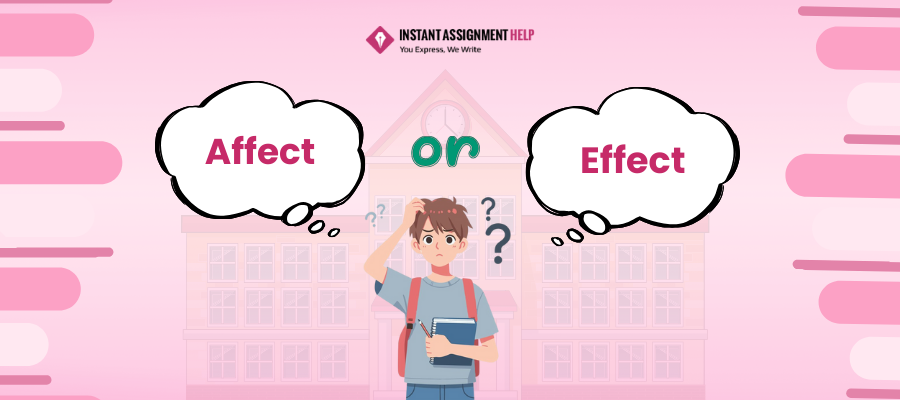
Table of Content
"Ever said' the movie will effect me' instead of 'affect me'? You are not alone." Many of you struggle with writing accurately, mainly when it comes to learning Effect and Affect. Further, you get confused when to choose Effect or Affect for emails, essays, articles or even professional papers. Learning when to use affect or effect correctly makes sure your meaning is clear, whether you are working on exams or just writing simple contexts.
Moreover, it's also crucial to know when something is affected or affected. It is because using the wrong word form can change the entire meaning fully. Real-life example, memory tricks and simple plans will make these words easier to use accurately. By following this guide, you can use Effect and Affect and know when words are effected or affected and write clearly every time.
Introduction | Affect vs Effect Explained
Many of you often get confused when it comes to effect and affect, which ultimately leads to errors in writing and communication. The difference between Effect and Affect is vital because one is usually a noun and the other is a verb. Remember, these are exceptions. Let's understand it with an example: "The cold weather affected her mood. It shows how something impacts or changes a scenario. On the other hand, "The new law has a positive effect on the community. It determines the result. Thus, learning these potential distinctions is crucial for clear and professional writing.
Furthermore, it is also critical to know less common forms, such as "effected" and "affected." Let's begin by affecting first. It is used when something is brought about or caused intentionally, as in "The manager effected crucial changes in the schedule." Now, affected. It is the past tense of "to affect". It means something was impacted, such as "The delay affected the project due date." Thus, you must know the correct use of Affect or Effect UK to ensure your writing is accurate and avoids common mistakes.
Why Are Affect and Effect So Confusing?
Choosing between affect and effect can feel like solving a tricky grammar puzzle. It is because one word is usually a verb (affect), while the other is most commonly a noun (effect). This basic difference can make a huge impact on meaning, mainly in formal writing or exams.
Even native speakers sometimes pause and try to figure out whether to use Affect or Effect in a sentence. For example, "The speech will effect change" and "The speech will affect change" show how changing the word can change its meaning fully. Therefore, learning the rules of affect or effect grammar and practising real examples is the key to writing clearly and accurately.
What Does "Affect" Mean?
Affect is mostly used as a verb, and it means to hold or make a change to something. In simple words, if something affects anything else, it causes it to be diverse in some way. For example, "The heavy rain impacted the football match," which means the rain varied or affected the play.
The past tense of affect is affected, which indicates that the impact of the change has already occurred. For example, "The delay affected our travel plans." It makes it simpler that the impact has taken place. In less common cases, affect can also be a noun, mainly in psychology, where it refers to a person's emotional expression. On the other hand, when it comes to daily writing, you will always see affect as a verb.
What Does "Effect" Mean?
Effect is mostly used as a noun, and it refers to the result of an action. For example, "The new policy had a positive effect on productivity" shows that the policy has a specific outcome. Further, the effect shows what actually happens because of that action.
Sometimes, effect can also be used as a verb. It means to bring something about or make it happen. For example, "The manager effected major changes in the schedule," shows that the chief actively caused the changes to take place. Also, if you know when to use effect and affect and their correct usage, it ensures that your writing is accurate and free of common grammar errors.
Difference Between Effect and Affect
Many of you, and even writers, face issues with when to use Affect vs Effect accurately. It is because the words sound similar but have different meanings. Learning the difference between the affect and effect is vital for clear writing, mainly in exams, projects and professional contact. Here is a simple table that will help to remember the potential difference.
|
Aspect |
Affect |
Effect |
|
Part of Speech |
Usually, a verb shows the impact of actions. |
Mainly a noun that shows the outcome. |
|
Example Sentence |
"The cold weather affected her mood." |
"The cold weather hurt her mood." |
|
Other Forms |
Past tense: Affected |
As a verb: Effected, meaning to bring about. |
Knowing the difference between affect and effect helps you write more confidently. Further, accurate usage of affect vs effect for students accurately guarantees that your writing is accurate. Further, using an essay typer helps you structure sentences correctly.
When to Use Affect | Rules and Examples
"Affect and "Effect" are often confuse learners. As discussed, affect is mainly used when talking about change or influence. Further, if you know when to use it helps you write clear and correct sentences.
When to Use "Affect":
- The use effect when one thing causes a change in another.
- Use affect when an action or situation impacts an outcome.
- Use affect when something influences feelings, health or behaviour.
- Use affect when the environment or external factors cause an effect.
Rule for Using "Affect":
- Rule 1: Use affect when showing cause and change.
- Rule 2: "Affect" mainly comes before the thing being changed.
- Rule 3: Follow the structure Subject + affect + object.
Examples of "Affect":
- Stress affects mental health.
- The weather affects travel plans.
- A poor diet affects the body.
- Loud noise affects concentration.
- Exercise affects energy levels.
When to Use Effect| Rules and Examples
"Effect is often confused with "affect." Also, effect is mainly used when talking about a result or outcome. Further, learning its use helps in picking the correct word in sentences.
When to Use "Effect":
- Use effect when you are talking about the result of a change.
- Use effect when you mean the outcome of an action or event.
- Use effect when something has already happened and produced a result.
- Use it when debating final impacts or outcomes.
Rules of Using "Effect":
- Rule 1: Use effect to show the result, not the effort.
- Rule 2: "Effect" arrives after the move has taken place.
- Rule 3: Follow the form Subject + verb + effect.
Instances of "Effect":
- Training has a positive effect on health.
- The new law had a powerful effect on society.
- Lack of sleep has a bad effect on concentration.
- Pollution hurts the environment.
- The teacher's advice had a lasting effect on the student.
Common Errors to Avoid with Affect and Effect
Many students find affect and effect confusing because they sound the same and are often used in the same situations. Further, if you know some familiar errors, it can help you pick the correct word and improve your writing precision.
Basic Errors to Avoid:
- Using "affect" rather than "effect".
- Error: The therapy had a good effect.
- Correction: The cure had a good effect.
- Reason: You are talking about an outcome, not an action.
- Forgetting the Action vs Result Rule:
- Affect is used for doing something.
- The effect is used for what happens because of it.
- Not Checking Sentence Structure:
- Affect usually comes before the thing being changed.
- The effect often comes after words like has, have, " and " had.
- Accepting Both Words Can Be Used the Same Way
- Mistake: Changing them because they sound the same.
- Rule: Always check whether the sentence is about the reason or the result.
To bypass errors, remember the simple rule: Affect is the action, effect is the result. If something is causing a difference, use the word " affect. If you are talking about the result of the change, use effect. Further, practising this difference will assist you in using both words correctly and confidently. Also, using a grammar checker can help you catch mistakes and reinforce accurate usage in your writing.
Affect vs Effect in Academic and Professional Writing
In academic and professional writing, using the correct word is very crucial because precision and accuracy matter. Further, affect and effect are confused, but they serve several purposes. Learning how every word is used helps make writing more accurate and professional.
|
Aspect |
Affect |
Effect |
|
Basic Use |
Shows an action or influence. |
Shows a result or outcome. |
|
Common Role |
Used to explain cause. |
Used to determine consequence. |
|
Usage in Academic Writing |
Used when discussing variables that change something. |
Used when discussing results, findings or results. |
|
Usage in Professional Writing |
Used to explain how decisions or actions impact work or people. |
Used to describe the final impact of actions or rules. |
|
Sentence Focus |
Focuses on what causes change. |
Focuses on what happens because of the change. |
|
Example(Academic) |
Stress can affect student performance. |
Stress harms student performance. |
|
Example(Professional) |
New policies may affect employees. |
The new policy has a positive effect on productivity. |
In academic and professional writing, your selection between Affect and effect depends on whether you are talking about a cause or a result. Further, use the effect-determining influence or change and use the effect when explaining outcomes or results.
Easy Ways to Remember the Difference
Remember the action or result rule. Affect = action or influence. Further, Effect = result or outcome.
- Use the A-E order trick.
- Affect comes first(The action happens first).
- The effect comes later(The result comes after).
- Check the sentence meaning.
- If something is causing a change, use affect.
- Further, if it shows what happened because of the change, use the effect.
- Think of simple examples.
- Rain affects roads.
- Flooding is the effect of heavy rain.
- Use the "influence vs result" test.
- Influence = affect.
- Result = effect.
- Look for helping terms.
- Words such as has, have and had often come before effect.
- Action verbs often come with effect.
- Short memory tricks.
- Affect = Action.
- Effect = result.
Affect vs Effect | Real Sentence Examples
Learning the difference between the Affect and effect becomes simpler with real sentence examples. Further, seeing how every word is used in context helps you use them accurately in writing.
|
Word |
Example Sentence |
Explanation |
|
Affect |
The loud music affects my focus. |
Shows an action that impacts focus. |
|
Affect |
Smoking affects lung health. |
Shows something causing a change in health. |
|
Affect |
Stress can affect decision-making. |
Shows how stress influences choices. |
|
Effect |
The new law had a positive effect on the community. |
Show the result of the new law. |
|
Effect |
Lack of sleep harms memory. |
Shows the outcome of not sleeping enough. |
|
Effect |
The medicine took instant effect. |
Shows the result produced by the medicine. |
Using real sentence examples makes it simpler to remember thatthe effect is for actions or influence. On the other hand, the effect is the result or outcome. Further, getting assignment help can assist you by offering clear examples, explanations and practice exercises that reinforce the correct use of affect vs effect in academic writing.
Key Takeaways
- Affect and effect are often confused because they sound the same but have different uses.
- Affect is usually a verb that means to influence or cause a change.
- An effect is basically a noun that means the result or outcome of a change.
- Use affect when something causes a change or impacts something else.
- Use effect when referring to the result or outcome of an action or event.
- In academic writing, affect is used to influence variables. On the other hand, effect is used for results or findings.
- Common errors include swapping affect and effect incorrectly, and always check if the sentence is used for results or findings.
- Easy way to remember: Affect = Action, Effect = result.
- Sentence Structure tip: Affect = Subject + affect + object, Effect = follows has, have, had or produces.
- Practice with real examples to master accurate usage in professional, academic and everyday writing.
Was This Blog Helpful?


Frequently Asked Questions
- Is there a simple way to remember the difference?
A simple way to think: Affect = Action, Effect = End result. Further, if something is causing a change, use the word "affect". Moreover, if you are thinking about the result of that change, use "effect". Remember the A-E order: Action comes first, result comes later. - What is the main difference between affect and effect?
The primary difference is in their roles. Affect is usually a verb that shows an action that impacts or changes something. An effect is usually a noun that shows the result of the outcome of that specific action. In simple words, affect = cause/change, effect = result/consequence.
- How do I know when to use effect?
Use effect when referring to the result or outcome of something. Further, it often follows words such as has, had or produce. Example: "The new rule had a positive effect on students." If the sentence explains what happened because of an action, use effect. - How do I know when to use affect?
Use affect when something influences or changes another thing. It is an action word, so look for a subject doing something to an object. Example: "Cold weather affects my mood." If the sentence shows cause of influence, use affect.




Get 5% Cashback
On App - Grab it while it lasts!

Download app now (or) Scan the QR code



Login / Sign up
Get Your Free Dissertation Outline NOW !Congratulations!
Check Your Registered Mail for download

- Plagiarism
- Pricing
- Order Now
- Call Back