How to Apply PALMS Model of Communication Effectively at Work and in Life?


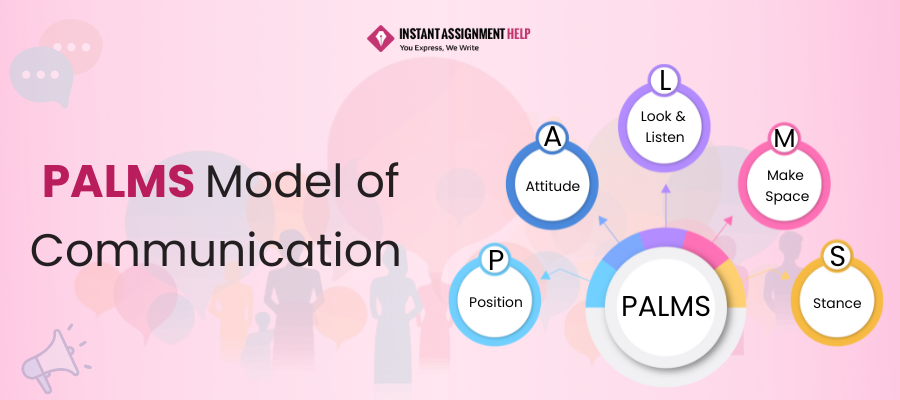
Table of Content
There are countless models developed in the Psychology subject for conflict resolution, general communication, studies, and do business. One of them is the PALMS model of communication. Have you heard of it? If yes, then good, but if your answer is “No”, worry not, you are not alone. Despite the model being used unintentionally, students are still unfamiliar with it. To familiarise you with the PALMS model of communication and enhance your communication skills, this blog will guide you through its components and applications in various contexts. By the end of this blog, you will have a better knowledge of this vital model and its role to make your communication skills better. So, without any delay, let's begin!
What Is a PALMS Model of Communication?
If you have decided to read this blog, then you might not have knowledge about what is palms model of communication is, or you may read this to brush up your knowledge. In both cases, you should know that it is a significant model and widely used in the field of communication studies. It is also a tool to signal non-aggression and de-escalate tense situations effectively. The model is actually a framework created to enhance interpersonal communication where clarity, empathy, and non-confrontational engagement are required.
Unlike traditional models that focus only on message transmission, the PALMS model integrates both verbal and non-verbal elements to hold a balanced and proper conversation. At its core, the model is made up of an acronym that represents five key principles. So, the palms model of communication stands for position, attitude, look, listen, make space, and stance. The elements of the model for your better interpretation:
- P - Position:
- In communication: Make sure that the language does not create a barrier.
- In conflict: Do not block the exit. Make sure the person does not feel trapped.
- A - Attitude:
- In communication: Your tone and facial expressions should show your willingness to listen and engage constructively.
- In conflict: Show a positive & helpful attitude to not send conflict around in a circle.
- L - Look & Listen:
- In communication: Pay close attention to both verbal and non-verbal cues and ensure that you understand the other person's perspective before taking action.
- In conflict: To resolve a conflict, you must listen actively. Use regular eye contact and do not stare, as it can escalate conflict.
- M - Make Space:
- In communication: When you communicate, it is good practice to maintain distance and hold relaxed and open interaction.
- In conflict: Maintain a comfortable distance, do not evade someone's intimate space.
- S - Stance:
- In communication, your posture and body language should communicate openness so that others can communicate with you.
- In conflict: Shoulders should be relaxed, and a safe distance should be maintained, as the risk of escalating is relatively high.
In this section, you learnt about the palms model of communication conflict resolution to resolve conflict situations. Next up, you will learn about the purpose of this model.
What Is the Purpose of PALMS Model of Communication?
The model is developed to communicate that helps individuals have conversations with clarity, intention, and impact. It ensures that messages are not only delivered effectively but also received and understood as they are intended to. The model is designed to:
-
Clarify communicator's intent:
Before you craft any message, the communicator should know precisely what they want to achieve. The PALMS model encourages you to define your purpose with precision of message. It helps prevent vague or unfocused communication and ensures that every word you choose moves with clear intent and has a meaningful outcome.
-
Promote audience-centred communication:
If you want to hold effective communication with an audience, you have to make sure that they understand you precisely as you want. The PALMS model of communication makes communicators consider the audience's background, needs, expectations, level of knowledge, emotional state and other factors. If you personalise your message with this model, you can increase importance, enhance engagement, and comprehend better.
-
Encourage Thoughtful Choice:
Language can shape perception. The PALMS model encourages the selection of words for clarity, context-appropriateness and purpose. It helps you avoid jargon when you speak with non-experts and ensures sentences are easy to follow. That way, it ensures that the audience not only hears but truly understands your message. The language choice helps your message become more relatable and respectful, reducing the risk of confusion or any misinterpretation.
-
Improve Channel Selection:
The medium you choose to communicate with can make or break the effectiveness of your communication. The PALMS model reminds communicators to select the channel, like email, phone call, in-person conversation, presentation, or report, that best suits the proper message and the audience. If you select the correct channel, it can enhance clarity, maintain professionalism, and respect the audience's time.
-
Reduce Miscommunication:
When you use the PALMS model to address it, it reduces the likelihood of errors, confusion, or misinterpretation. If the communication is intentional and tailored as per your preferences, the message becomes easier to understand and harder to misread. It results in more productive conversations, fewer conflicts, and faster decision-making.
The content given above helps you to know the purpose of the PALMS model of communication. Next up, you will get to know the variations in the PALMS model. Similar to this, you can also try to study the LEAPS model of communication if you want to make your communication skills better.

Want to Get Better at Written & Verbal Communication?
Hire Professionals Today to Make Your Content of Better Quality.

Variations in PALMS Model - Conflict resolution and General Communication
Given below is a table that will help you understand the importance of the PALMS model. It's used in both conflict resolution and general communication. The PALMS model of communication is versatile and can be adapted to fit different communication contexts. Two of the most common variations are seen in conflict resolution and general communication. So without a delay, let's dive into it.
|
PALMS Elements |
Conflict Resolution |
General Communication |
|
Position |
Take a neutral, balanced position focused on understanding both sides. Do not take sides or defend only your viewpoint. |
Position yourself to clearly present your message, role, or information. You may take a more direct or authoritative role when needed. |
|
Attitude |
Maintain a calm, patient, and empathetic attitude so that you can de-escalate tough situations. Show openness and willingness to collaborate. |
Attitude remains professional or friendly, depends on the context. Less emotional sensitivity is needed compared to conflict situations. |
|
Look & Listen |
Observe actively for non-verbal cues, emotions, and tone. Listen actively so that you understand the concerns, not just the words spoken. |
Observe actively non-verbal cues, emotions, and tone. Listen in deep to understand concerns, not just the words spoken. |
|
Make Space |
Create space for each person to express themselves safely. Allow pauses, reflections, and equal opportunity to speak. |
Make space for open dialogue, but the emphasis is on efficiency and flow rather than emotional process. |
|
Stance |
Adopt a collaborative, solution-oriented stance. Focus on mutual understanding and fairness. |
Stance is more focused as it delivers the message effectively—informative, persuasive, instructional, or casual, depend on context. |
By now, you should know that the PALMS model of communication can be used for general communication and even resolve conflicts. You can hire ghost writers UK if you want them in your written content.
How to Apply the PALMS Model at Work and in Academics?
The PALMS model of communication is a flexible framework that can be used across all areas of communication. Whether you interact at work, lead meetings, or navigate personal relationships, PALMS helps you communicate with clarity, intention, and respect. If you want to learn more about the models, you can use Assignment Help services, where you can find ways to use them in your assignments or projects. Given below is how to apply each element in different contexts:
-
At Work -
If you apply the PALMS Model in professional areas, it will enhance your teamwork, productivity, and workplace relationships:
- Position: Define your role and message. Whether you present ideas or give a review, stay focused and determined.
- Attitude: Maintain a professional, respectful, and solution-oriented mindset. Your attitude sets the tone for further collaboration.
- Look & Listen: Check body language, tone, and reactions. Listen actively so that you understand and not just to respond.
- Make Space: Ensure that every team member feels heard. Invite input, encourage questions, and create an inclusive communication environment.
- Stance: Use a confident yet open stance. Be assertive without being aggressive, and consider any alternative perspectives.
-
In Academics -
- Position: As a student, sit where you can focus and study better. Position yourself near students who can collaborate and teach you.
- Attitude: Make sure that you cultivate a growth mindset. Try to approach complex subjects with curiosity instead of avoidance.
- Look & Listen: Do not try to write in lectures; instead, listen actively. Notice the professor's clues for what's important.
- Make Space: As grades can be daunting, give yourself some mental space before you react to your marks or feedback.
- Stance: As a student, you should become an active listener, collaborator, self-advocate and mentor to the needful students.
What Are the Biggest Mistakes People Make With the PALMS Model?
It's better to learn from others' mistakes than to make the same mistake yourself. The PALMS model can be difficult to understand or apply properly if you do not practice. If you want to avoid mistakes in complex questions, you can use do my homework services. For your information, some common mistakes related to each element of the PALMS model are given below:
Position:
- As you stand too close to someone, it can create pressure or intimidation.
- While you speak, sit behind a desk or barrier instead of an open line of connection. It makes it difficult for others to observe body language clearly.
- It matters because physical position directly affects your psychological safety and openness.
Attitude:
- You should control yourself and not allow your internal state to leak out.
- Forgetting the tone, posture, and micro-expressions reflects attitude more than the speech.
- It matters as people respond to your energy first, your words second.
Look & Listen:
- You may look attentive, but internally preparing your response lowers your focus.
- Sometimes you treat silence as a prompt to rescue or interrupt. Only try to listen for facts and miss emotions or meaning.
- To have an effective connection, you have to track the whole person genuinely, not just their words.
Make space:
- Sometimes, people try to fill pauses because silence feels uncomfortable.
- Jump in with the solutions, interpretations, or advice too early.
- It can matter because people have better insights when they're given time and room to process.
Stance:
- When you start to show inconsistency between words and behaviour, you make a mistake.
- If you shift your stance as per your mood rather than intention, and you take a stance that is too rigid, too involved, it can cause issues.
- It matters as your stance shapes the entire relational dynamic and determines how people feel empowered or controlled.
Also Read: Argyle's Theory of Communication
How Top Performers Use the PALMS Model Daily - With Examples?
Top performers, such as effective managers and crisis negotiators, use the PALMS model to manage difficult conversations and de-escalate aggressive moments.
Position: They ensure the other person is not feeling trapped. For example, a security personnel member keeps their body in such a way that the other person always has a clear path to exit.
Attitude: They have to maintain a calm, positive, and helpful manner to set a correct tone. For example, a salesman must stay neutral and offer a smile along with a calm tone of voice to sell.
Look & Listen: They use correct eye contact and listen actively to show genuine engagement and respect. For example, after listening to the employee, the manager nods to build trust.
Make Space: They maintain a comfortable physical distance to avoid intimidation & allow relaxed interaction. For example, while conducting checkups, a healthcare professional should stand a few steps back from a patient.
Stance: These people and their body language are open and non-threatening to signal cooperation. For example, when employees discuss a sensitive topic, a team leader keeps their arms uncrossed and hands visible, which sends a signal of openness.
This section was about how top performers use the PALMS model daily, along with examples. Hope you learnt from the examples given above and use the model for improving communication.
Final Thoughts
Effective communication is not just about some words, it's beyond written or verbal communication. It needs clarity, structure and delivery. Through this blog, you get to learn about what describes the palms model of communication. The PALMS model can be used both in academics and at work. If you use it to resolve conflict, it is called the palms model of communication NHS. Although the meaning of each element changes, the core idea remains the same. It is vital to have clear and acceptable communication between individuals. If you can integrate the elements of PALMS, you can write messages that are clear, engaging, and impactful. Moreover, the model also refines the approach by emphasising non-verbal cues and conflict resolution strategies. Hopefully, you can implement these methods and become a great communicator.
Read More - How to Write Your PETAL Paragraph for Higher Marks?
Was This Blog Helpful?


Most Popular Questions Searched By Students
- How Will PALMS Model Improve Communication?
The PALMS model of enhances communication by making a structured approach to create messages that are clear, targeted, and engaging for the intended audience. - Why is the PALMS Model Important?
The model helps in communicating by: - Ensuring their message is clear and purposeful
- Helps to avoid misunderstanding
- Engage the audience effectively
- Improve overall communication efficiency
- Who can Benefit From Using the PALMS Model?
The model is beneficial for students and educators, professionals in business, public speakers and trainers, team leaders and managers, and anyone who uses this model in daily conversations. - Can the PALMS Model be Used in Both Written and Verbal Communication?
Yes, the model is versatile and can be applied to emails, reports, presentations, meetings, speeches and even casual conversations. The principles of clarity, audience awareness, and purpose are universal.

Get 5% Cashback
On App - Grab it while it lasts!
Download app now (or) Scan the QR code



Login / Sign up
Get Your Free Dissertation Outline NOW !Congratulations!
Check Your Registered Mail for download

- Plagiarism
- Pricing
- Order Now
- Call Back